
Jaipur – The Pink City of India


Introduction to Jaipur
This Jaipur travel guide helps you explore the best attractions, royal forts, shopping markets, and local food experiences in Rajasthan’s famous Pink City. Whether you are planning a short vacation or a cultural trip, this Jaipur travel guide covers everything you need to know.
Jaipur, popularly known as the “Pink City,” is the capital of Rajasthan and one of India’s most famous tourist destinations. The city is admired for its royal palaces, historic forts, colorful bazaars, traditional culture, and delicious Rajasthani cuisine. Founded in 1727 by Maharaja Sawai Jai Singh II, Jaipur beautifully blends heritage with modern urban life.
As part of India’s famous Golden Triangle tourist circuit along with Delhi and Agra, Jaipur attracts millions of domestic and international visitors every year.
Why Jaipur is Famous
Jaipur is famous for:
- Royal palaces and forts
- Pink-colored historic buildings
- Traditional handicrafts and jewelry
- Rich Rajasthani culture
- Authentic local cuisine
- Vibrant bazaars
- UNESCO World Heritage sites
The city forms an important part of India’s famous Golden Triangle Tour, along with Delhi and Agra.
Key Facts About Jaipur
- Nickname: Pink City of India
- State: Rajasthan
- Founded In: 1727
- Founder: Maharaja Sawai Jai Singh II
- Language Spoken: Hindi and Rajasthani
- Famous For: Forts, palaces, shopping, jewelry, handicrafts, and culture
- UNESCO Recognition: Jaipur was declared a UNESCO World Heritage City in 2019
- Best Time to Visit: October to March
- Popular Cuisine: Dal Baati Churma, Ghewar, Laal Maas, and Kachori
- Main Tourist Attractions: Hawa Mahal, Amber Fort, City Palace, Jantar Mantar, Nahargarh Fort
- Shopping Specialties: Gemstones, block printing, Mojari footwear, blue pottery, and traditional textiles
- Nearest Airport: Jaipur International Airport
- Tourism Importance: One of the top tourist cities in India
Top Tourist Attractions in Jaipur
1. Hawa Mahal


Introduction
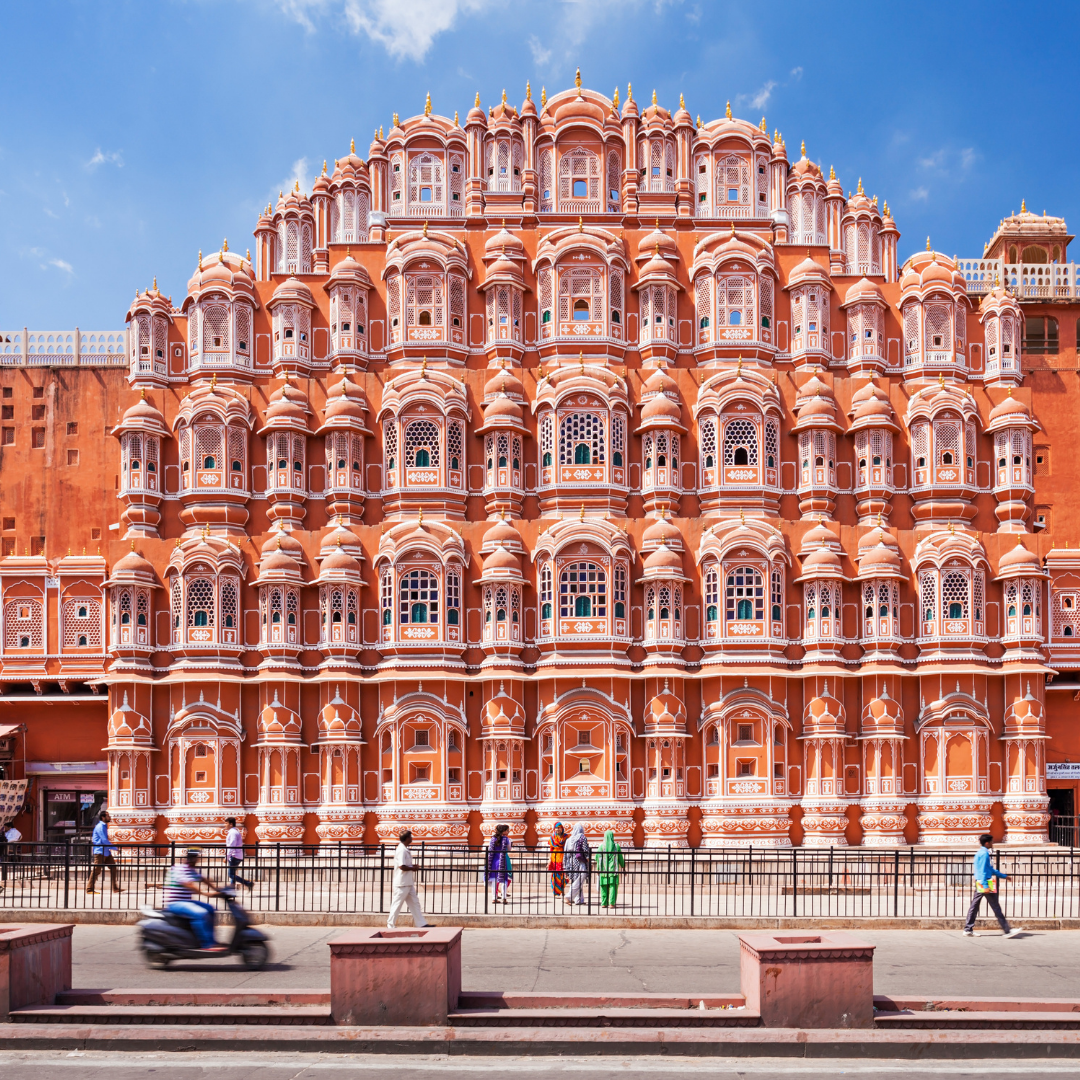
Located in the heart of the Pink City of Jaipur, Hawa Mahal is one of India’s most iconic architectural landmarks. Known as the “Palace of Winds,” this magnificent structure is famous for its unique honeycomb-shaped façade, intricate windows, and rich royal history. Built from red and pink sandstone, Hawa Mahal perfectly reflects the grandeur of Rajput architecture blended with Mughal influences.
Constructed in 1799 by Maharaja Sawai Pratap Singh, the palace was designed to allow royal women to observe street festivals and daily life without being seen by the public, following the strict purdah system of that era. Today, Hawa Mahal stands as a symbol of Jaipur’s cultural heritage and attracts millions of tourists from around the world. According to this Jaipur travel guide, Hawa Mahal is one of the most iconic attractions that every visitor should explore in the Pink City.
Architecture of Hawa Mahal
The architecture of Hawa Mahal is one of its biggest attractions. The five-story structure features 953 small windows, known as “jharokhas,” decorated with intricate latticework. These windows allow cool breeze and sunlight to enter while maintaining privacy for royal women.
Architectural Highlights
- Built using red and pink sandstone
- Five-story pyramidal structure
- 953 beautifully designed jharokhas
- Blend of Rajput and Mughal architectural styles
- Natural air-conditioning system through ventilated windows
- Stunning honeycomb-shaped façade
Key Facts About Hawa Mahal
- Located in the center of Jaipur, also known as the Pink City
- Built in the year 1799
- Commissioned by Maharaja Sawai Pratap Singh
- Designed by architect Lal Chand Ustad
- Known as the “Palace of Winds”
- Contains 953 small windows (jharokhas)
- Made from red and pink sandstone
- Built to allow royal women to observe city life privately
- Inspired by the crown of Lord Krishna
- One of the most photographed monuments in Rajasthan
- Features excellent natural ventilation even during summer
- Connected to the City Palace complex
2. Amber Fort

Introduction
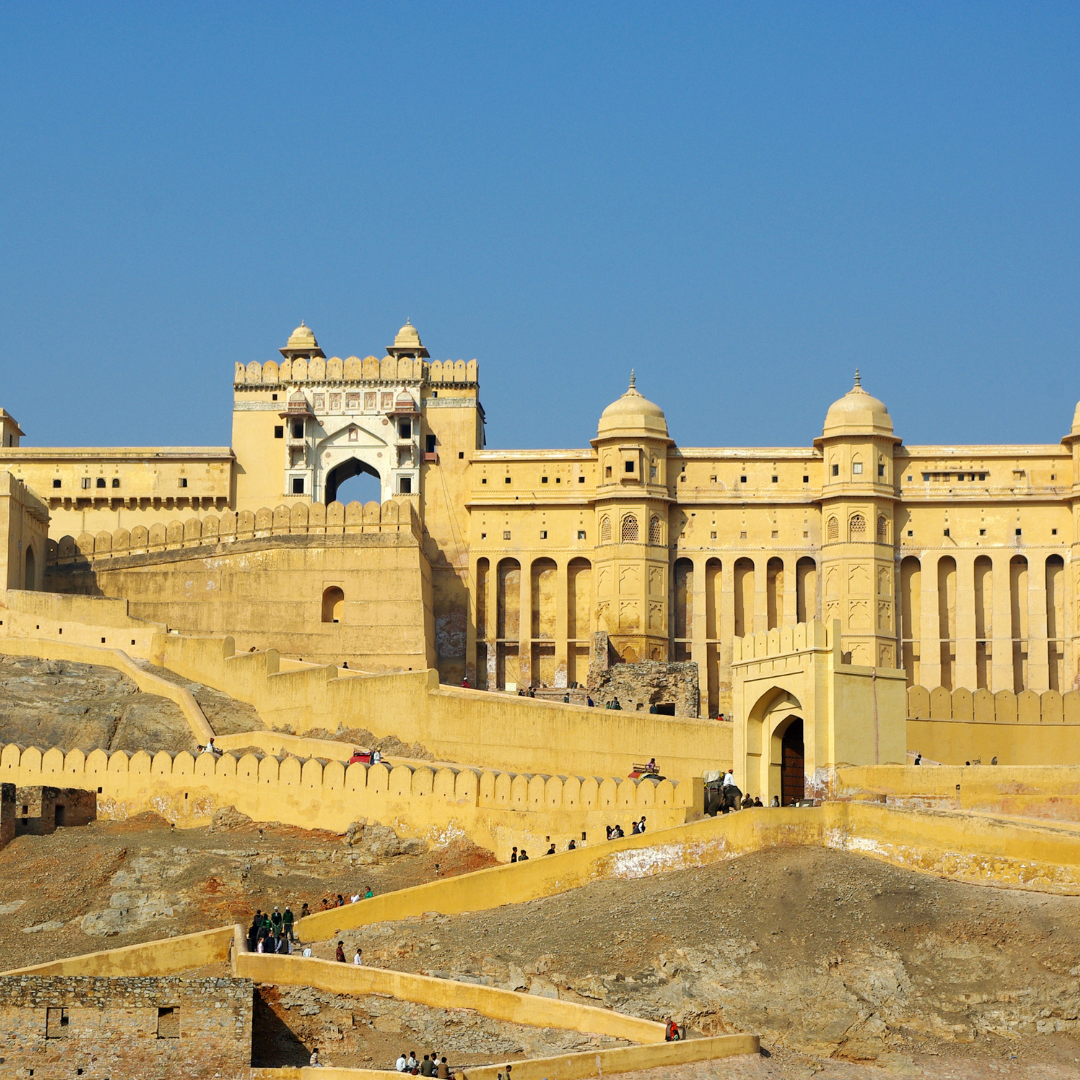
Nestled on the rugged hills of Jaipur, Amber Fort is one of the most magnificent historical landmarks in India. Known for its grand architecture, artistic Hindu-Rajput design, and breathtaking views of Maota Lake, this UNESCO World Heritage Site attracts millions of visitors every year. Built with red sandstone and marble, the fort beautifully combines Rajput and Mughal architectural styles, making it a must-visit destination in Rajasthan.
Located about 11 kilometers from Jaipur city center, Amber Fort reflects the grandeur and royal lifestyle of the Rajput rulers. From intricately designed courtyards to mirror-decorated halls, every corner of the fort tells stories of bravery, royalty, and artistic excellence.
Architecture of Amber Fort
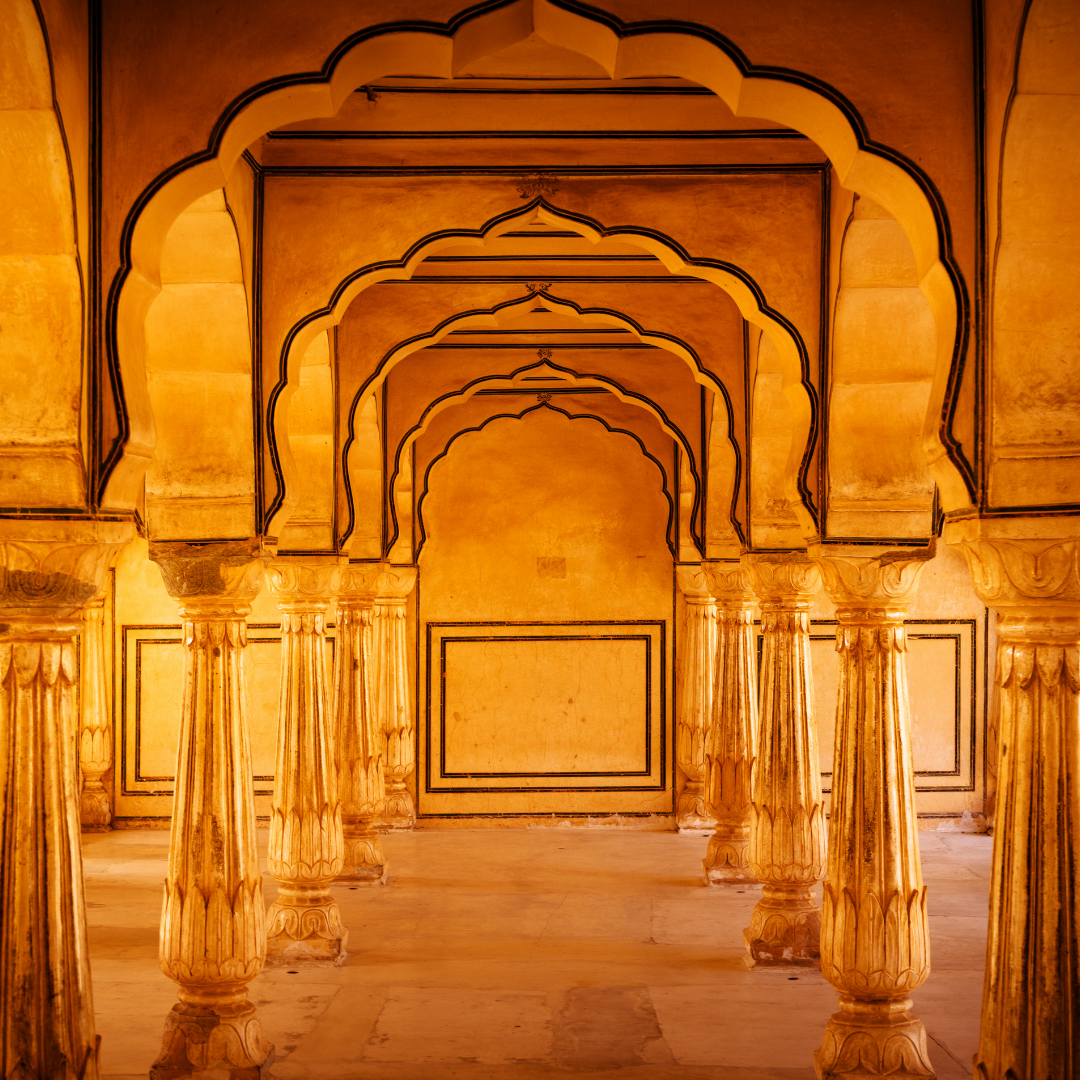
The architecture of Amber Fort is a stunning blend of Rajput and Mughal styles. The fort consists of large courtyards, royal halls, temples, gardens, and beautifully decorated rooms.
Major Attractions Inside Amber Fort
- Sheesh Mahal (Mirror Palace)
One of the most famous sections of the fort, Sheesh Mahal is decorated with thousands of tiny mirror pieces. Even a small ray of light illuminates the entire hall beautifully.
- Diwan-e-Aam
This public audience hall was used by kings to meet common people and hear their concerns.
- Diwan-e-Khas
A private hall where royal meetings and important discussions took place.
- Sukh Niwas
Known for its natural cooling system, this palace used flowing water channels to create a pleasant atmosphere during hot summers.
- Ganesh Pol
An ornate gateway featuring colorful frescoes and intricate artwork dedicated to Lord Ganesha.
Key Facts About Amber Fort
- Located in Jaipur, Rajasthan, India
- Built in the year 1592
- Constructed by Raja Man Singh I
- UNESCO World Heritage Site
- Famous for Rajput and Mughal architecture
- Made using red sandstone and white marble
- Situated on a hill overlooking Maota Lake
- Known for the stunning Sheesh Mahal
- Former capital of the Kachwaha Rajputs
- One of the top tourist attractions in Rajasthan
- Features grand courtyards, temples, and royal halls
- Popular for evening light and sound shows
- Connected with Jaigarh Fort through underground passages
3. City Palace


Introduction
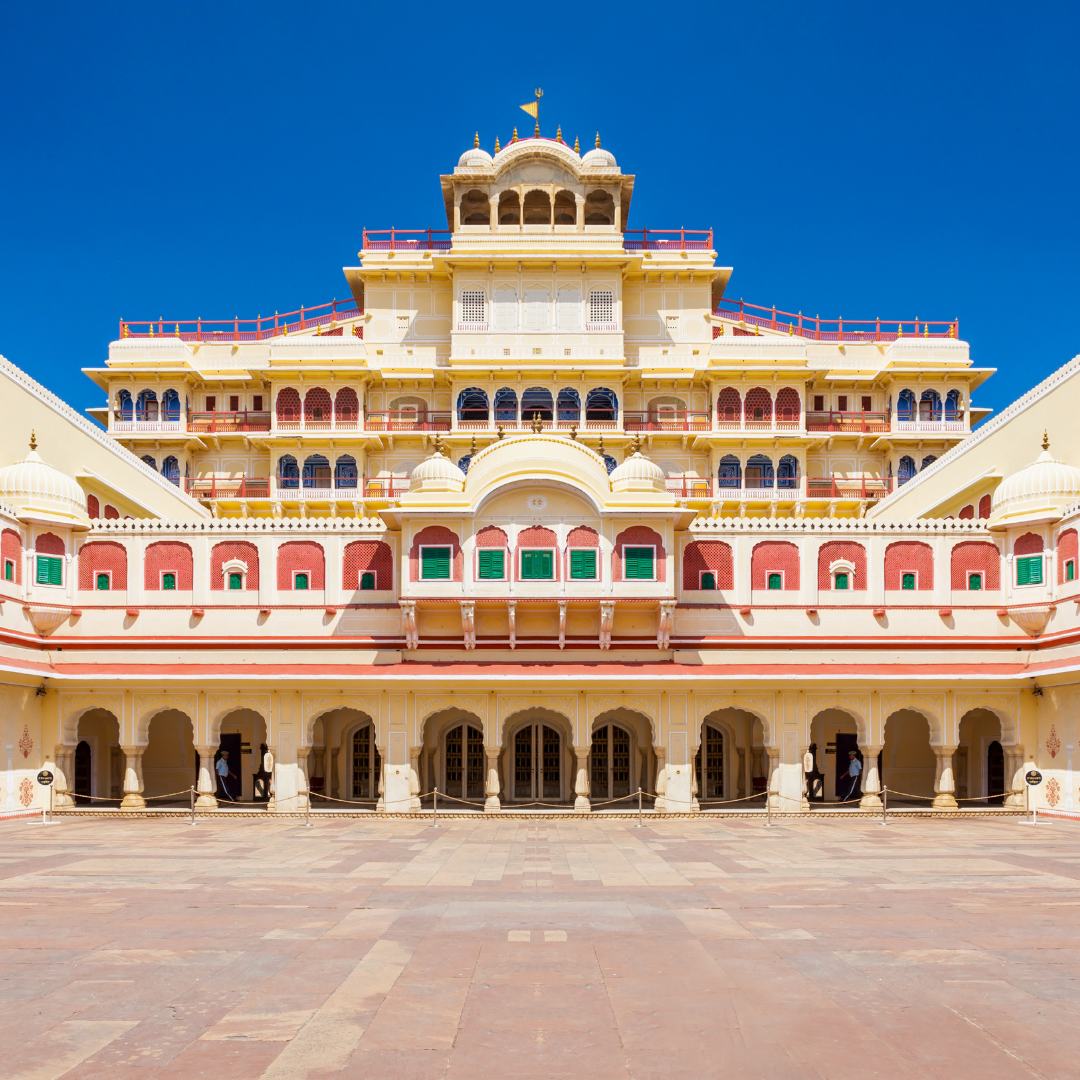
Located in the heart of the Pink City, the magnificent City Palace is one of the most iconic landmarks in Jaipur. Built by Maharaja Sawai Jai Singh II in the 18th century, this grand palace complex beautifully combines Rajput, Mughal, and European architectural styles. Even today, a part of the palace remains the residence of Jaipur’s royal family, making it a living heritage site.
The City Palace is known for its stunning courtyards, royal museums, intricate gateways, and beautifully decorated halls. Visitors can explore the rich history of Jaipur through royal costumes, weapons, manuscripts, paintings, and artifacts preserved inside the palace museums. The famous Peacock Gate, with its vibrant artwork symbolizing the four seasons, is one of the most photographed attractions within the palace complex.
The palace complex includes several major attractions such as Chandra Mahal, Mubarak Mahal, Diwan-i-Khas, and Diwan-i-Aam. Each section reflects the grandeur and royal lifestyle of the Rajput rulers. The architecture features marble pillars, carved arches, colorful frescoes, and beautifully designed courtyards that attract tourists, photographers, and history lovers from around the world.
Apart from its historical significance, the City Palace also hosts cultural events and traditional performances, offering visitors a glimpse into Rajasthan’s royal heritage and vibrant traditions. Its central location makes it easily accessible from other major attractions like Hawa Mahal and Jantar Mantar. According to this Jaipur travel guide, the City Palace is a must-visit destination for travelers interested in history, architecture, and royal culture.
Key Facts About City Palace
- Located in the center of Jaipur, popularly known as the Pink City
- Built by Maharaja Sawai Jai Singh II in the 18th century
- Showcases a blend of Rajput, Mughal, and European architecture
- Part of the palace is still home to Jaipur’s royal family
- Famous attractions include Chandra Mahal, Mubarak Mahal, and Peacock Gate
- Houses royal costumes, weapons, manuscripts, and historical artifacts
- Known for beautifully decorated courtyards and intricate artwork
- One of the top tourist attractions in Rajasthan
- Located near Hawa Mahal and Jantar Mantar
- Best visited during the winter season from October to March
- Ideal destination for history lovers, photographers, and culture enthusiasts
- Offers insight into the royal lifestyle and heritage of Rajasthan
4. Jantar Mantar


Introduction
Jantar Mantar is one of India’s most fascinating historical and scientific landmarks. Located in the heart of Jaipur, this UNESCO World Heritage Site showcases the advanced astronomical knowledge of ancient India. Built in the 18th century by Maharaja Sawai Jai Singh II, Jantar Mantar is a collection of massive architectural astronomical instruments designed to observe celestial bodies with remarkable accuracy.
Today, it stands as a symbol of India’s scientific heritage and attracts historians, astronomers, architects, and travelers from around the world.
Architecture and Design
The observatory features nineteen giant instruments made primarily from stone and marble. Each instrument was designed for a specific astronomical purpose and built with precise geometric calculations.
The structures combine science, architecture, and art, making Jantar Mantar a masterpiece of engineering. The instruments are large enough to improve observational accuracy, and many of them still function today.
Major Attractions Inside Jantar Mantar
- Samrat Yantra
The Samrat Yantra is the world’s largest stone sundial. It can measure time with an accuracy of about two seconds and stands approximately 27 meters high.
- Jai Prakash Yantra
This instrument helps in locating the position of celestial objects. Its bowl-shaped structure allows astronomers to map the sky effectively.
- Rama Yantra
The Rama Yantra measures the altitude and azimuth of celestial bodies. It consists of two circular buildings with open tops.
- Misra Yantra
The Misra Yantra was designed to determine the shortest and longest days of the year and calculate noon timings in different cities.
Key Facts About Jantar Mantar
- Located in Jaipur
- Built by Sawai Jai Singh II
- Construction period: 1728–1734
- UNESCO World Heritage Site since 2010
- Largest of the five Jantar Mantars in India
- Features 19 astronomical instruments
- Home to the world’s largest stone sundial
- Used for measuring time and tracking celestial movements
- Built using stone, marble, and brass
- Popular attraction for history, science, and architecture enthusiasts
5. Nahargarh Fort

Introduction
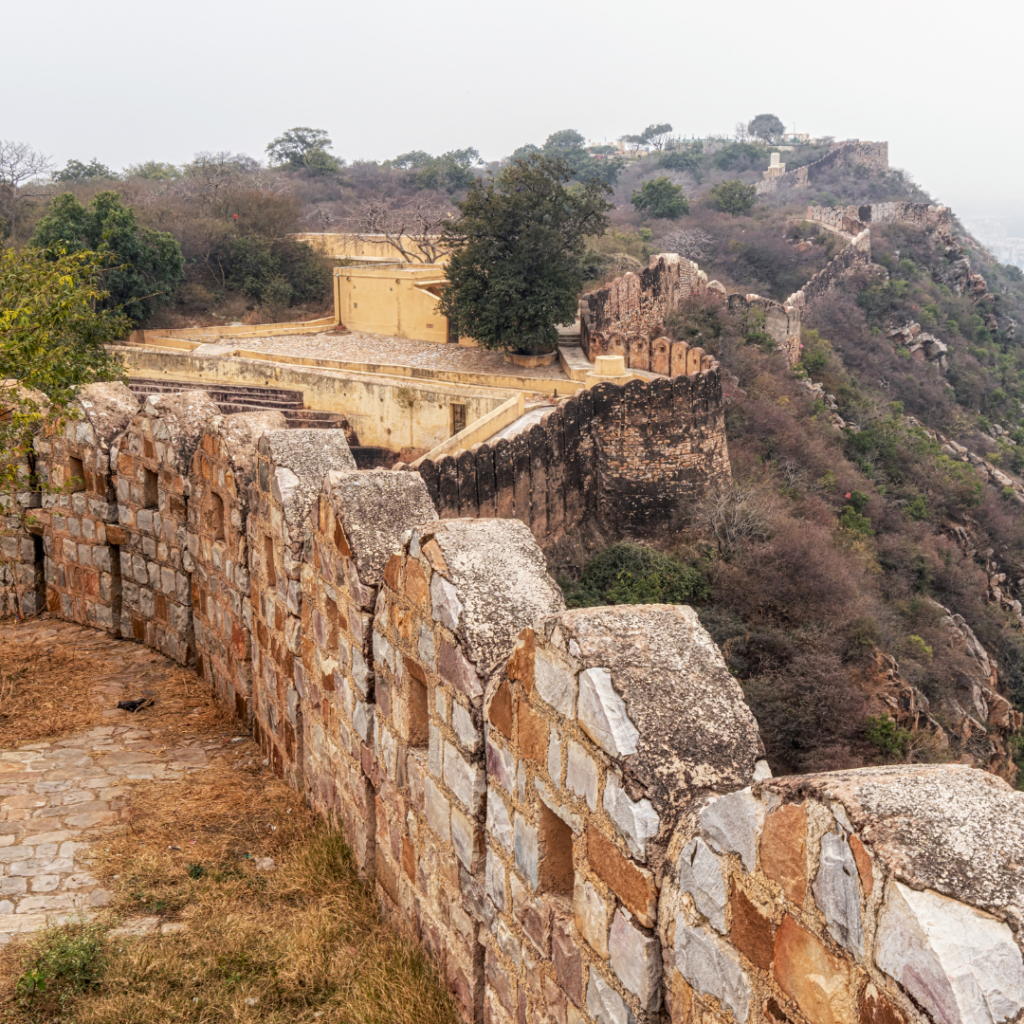
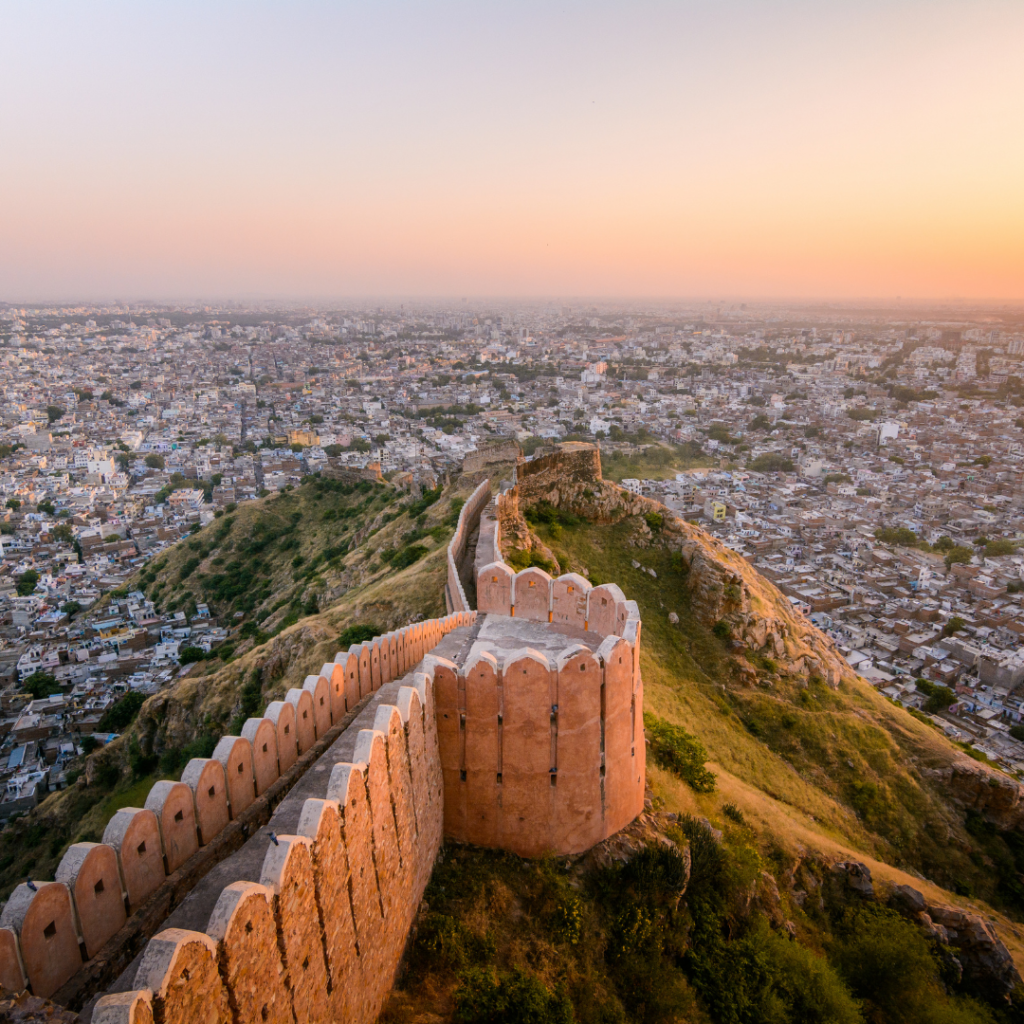
Perched high on the rugged Aravalli Hills, Nahargarh Fort is one of the most iconic historical attractions in Jaipur. Overlooking the Pink City, the fort offers breathtaking panoramic views, rich Rajput history, impressive architecture, and stunning sunset spots that attract thousands of tourists every year. Along with Amer Fort and Jaigarh Fort, Nahargarh Fort forms the famous defensive ring protecting Jaipur city.
Whether you are a history enthusiast, photographer, architecture lover, or traveler seeking scenic beauty, Nahargarh Fort is a must-visit destination in Rajasthan.
Architecture of Nahargarh Fort
The architecture of Nahargarh Fort beautifully combines Indian and European styles. The fort features:
- Massive defensive walls
- Elegant palaces
- Intricate frescoes
- Courtyards and corridors
- Royal suites for queens
- Stunning viewpoints
One of the major attractions inside the fort is the Madhavendra Bhawan, built by Maharaja Sawai Madho Singh. It contains identical suites for the king and his queens, connected through passageways designed for privacy and convenience.
Major Attractions Inside Nahargarh Fort
- Madhavendra Bhawan
This royal palace is the highlight of the fort. It consists of beautifully designed rooms, corridors, murals, and delicate artwork showcasing royal Rajput lifestyle.
- Sunset Point
Nahargarh Fort is widely famous for offering one of the best sunset views in Jaipur. Travelers often visit during evening hours to witness the city glowing under golden sunlight.
- Wax Museum
The fort complex also houses a wax museum featuring statues of famous personalities from Indian history and culture.
- Sheesh Mahal
A beautiful mirror palace decorated with intricate mirror work and artistic interiors.
Key Facts About Nahargarh Fort
- Located on the Aravalli Hills overlooking Jaipur
- Built in 1734 by Maharaja Sawai Jai Singh II
- Originally called Sudarshangarh
- “Nahargarh” means “Abode of Tigers”
- Famous for panoramic sunset views of Jaipur city
- Connected with Amer Fort and Jaigarh Fort through fortification walls
- Features the famous Madhavendra Bhawan palace
- Combines Rajput and European architectural styles
- Popular shooting location for Bollywood movies
- One of Jaipur’s top tourist attractions
Famous Food in Jaipur
A complete Jaipur travel guide is incomplete without mentioning the city’s famous food
Must-Try Foods
- Dal Baati Churma
- Laal Maas
- Pyaz Kachori
- Ghewar
- Ker Sangri
- Mawa Kachori
Street food lovers can explore the old city markets for authentic flavors.
How to Reach Jaipur
Known as the Pink City, Jaipur is one of India’s most popular tourist destinations and is well connected by air, rail, and road from major cities across the country.
1. Reach Jaipur by Air
The city is served by Jaipur International Airport, located about 13 km from the city center. It offers domestic and limited international flights connecting Jaipur to cities like Delhi, Mumbai, Bangalore, Hyderabad, and Dubai.
Major airlines operating here include:
- IndiGo
- Air India
- Akasa Air
- SpiceJet
From the airport, you can easily hire:
- Taxis
- App-based cabs
- Auto-rickshaws
- Hotel transfers
2. Reach Jaipur by Train
Jaipur Junction Railway Station is one of the busiest railway stations in North India and connects Jaipur with major cities including:
- Delhi
- Mumbai
- Ahmedabad
- Kolkata
- Chennai
- Hyderabad
Popular trains include:
- Shatabdi Express
- Rajdhani Express
- Double Decker Express
The railway station is located close to the main city, making local travel convenient.
3. Reach Jaipur by Road
Jaipur has excellent road connectivity through national highways and expressways.
Delhi
- Distance: Approx. 280 km
- Travel Time: 5–6 hours via NH48
Agra
- Distance: Approx. 240 km
- Travel Time: 4–5 hours
Udaipur
- Distance: Approx. 400 km
- Travel Time: 6–7 hours
You can travel via:
- Private cars
- State buses
- Volvo coaches
- Tourist cabs
Major bus operators include:
- Rajasthan State Road Transport Corporation
- Private luxury bus services
Best Time to Visit Jaipur
The best time to visit Jaipur is from October to March when the weather is pleasant, making it perfect for sightseeing, shopping, and exploring forts and palaces. During these months, the temperature usually ranges between 8°C to 25°C, offering comfortable conditions for tourists.
1. Winter Season (October to March) – Best Time
Winter is considered the ideal season to explore Jaipur. The cool climate allows visitors to comfortably visit famous attractions like Amber Fort, Hawa Mahal, and City Palace.
Why Visit in Winter?
- Pleasant weather for sightseeing
- Ideal for photography and outdoor activities
- Perfect for shopping in local bazaars
- Best season for cultural festivals and events
2. Summer Season (April to June)
Summers in Jaipur are extremely hot, with temperatures reaching up to 45°C. Outdoor travel can become tiring during daytime hours.
Summer Travel Tips
- Visit attractions early morning or evening
- Stay hydrated
- Prefer indoor attractions and cafes
- Budget-friendly hotel prices are often available
3. Monsoon Season (July to September)
Jaipur receives moderate rainfall during monsoon, bringing relief from summer heat. The city looks greener and more beautiful during this season.
Why Some Travelers Prefer Monsoon
- Scenic landscapes and cloudy weather
- Less crowded tourist spots
- Affordable hotel deals
Conclusion
Jaipur is a city where history, royalty, culture, food, and architecture come together beautifully. From magnificent forts and royal palaces to colorful bazaars and delicious food, Jaipur offers experiences that every traveler remembers for a lifetime.
This Jaipur travel guide helps travelers explore the best attractions, local markets, traditional cuisine, and cultural experiences in Rajasthan’s Pink City. Whether you are planning a family vacation, solo trip, cultural tour, or photography journey, Jaipur deserves a top place on your travel bucket list.
FAQs About Jaipur
Why is Jaipur called the Pink City?
Jaipur is called the Pink City because many buildings in the old city are painted pink, symbolizing hospitality.
Is Jaipur safe for tourists?
Yes, Jaipur is generally considered safe for domestic and international tourists.
How many days are enough for Jaipur?
A 3-day trip is ideal for exploring Jaipur comfortably.
What is Jaipur famous for shopping?
Jaipur is famous for jewelry, handicrafts, textiles, mojari footwear, and gemstones.
Which food is famous in Jaipur?
Dal Baati Churma, Pyaz Kachori, Ghewar, and Laal Maas are among Jaipur’s most famous dishes.
Why should tourists follow this Jaipur travel guide?
This Jaipur travel guide provides detailed information about attractions, food, shopping, accommodation, and travel tips for a smooth and enjoyable trip.